
Reflections
Below are our ongoing blog posts with reflections from Kim & the Relationship Matters team, recaps of podcast and other media appearances, and more!
Thank you for following along!
If you’d like to see articles on any particular topic, please drop us a line and let us know.
PODCAST: The Baby Sleep Connection Podcast - Kim Barthel on Connection, Regulation and Sleep
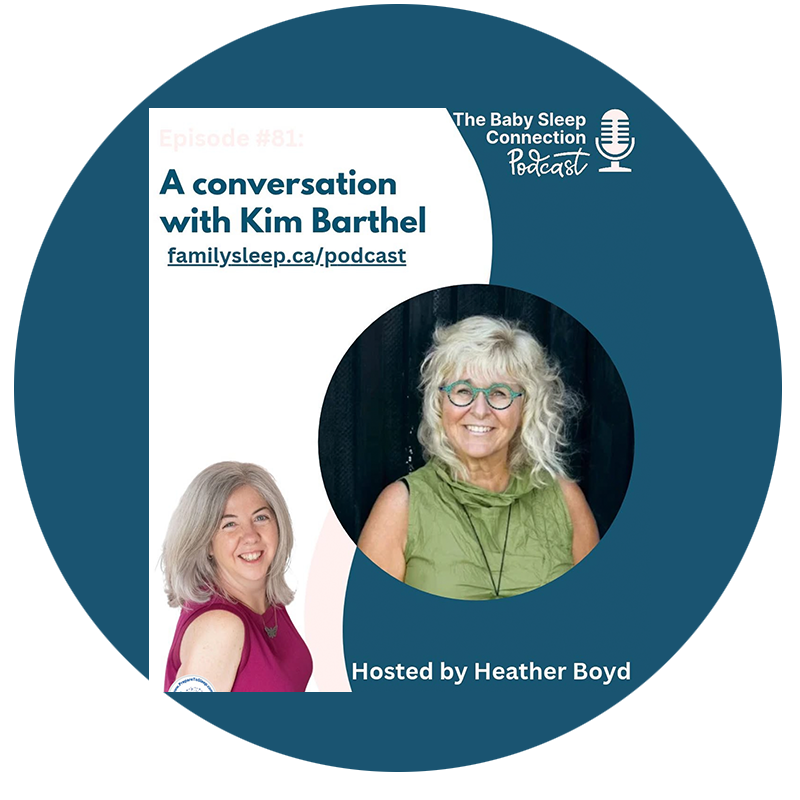
Kim recently had the pleasure of joining Heather Boyd on The Baby Sleep Connection Podcast for a conversation that wandered through so many of the ideas closest to her heart: how relationships, connection, and co-regulation shape us neurologically, socially, and emotionally.

PODCAST: The Science of Reading Formula - WHY KIDS ACT OUT AND WHAT THEIR NERVOUS SYSTEM IS TRYING TO TELL YOU
Kim joined Malia on The Science of Reading Formula podcast for a conversation about what's really happening underneath challenging classroom behaviour. Together they unpack how trauma and stress show up in the nervous system, why "meltdowns" and defiance are often protective strategies rather than defiance, and how teachers who stay regulated themselves can become an anchor for dysregulated students. It's a practical, compassionate reframe — moving from "what's wrong with you?" to "what happened to you?" — with real takeaways for anyone working with kids.

Retuning a Dysregulated World - Psychotherapy Networker
We live in a world that rarely stops. Between the relentless pace of modern demands and the constant stream of news and noise through our devices, many of us arrive at the end of the day feeling more like we've survived than lived. We long for connection — with our children, our partners, ourselves — but our bodies are stuck in a hum of protection that makes that connection feel just out of reach.
Kim Barthel, along with Somatic Experiencing Practitioner and Relationship Restoration Guide Leah Dawang, explores exactly this in a newly published piece for Psychotherapy Networker: Retuning a Dysregulated World.

Beyond the Mood Swings: The Neurobiology of Perimenopause
Perimenopause is not simply a hormonal transition. It is an invitation to better understand the remarkable relationship between our bodies, brains, and lived experiences. Join me and my colleague/friend Yumiko Kakutani for what we hope is an enlightening conversation directly relevant to some, and indirectly relevant to all.

Why Art Therapy Is Expanding
Across cultures and generations, humans have always found ways to express what is happening inside of them, and we still do. Sometimes we do this through words, but often through creating. Whether it is drawing, writing, moving, singing, or arranging objects from nature, we are naturally wired to make meaning through creativity.
There is a word for this: poiesis (pronounced poy-EE-siss). It means bringing something from the inside into form, and originates from Greek. Even if we have never heard the term, most of us have experienced it. It might look like doodling when we feel overwhelmed, playing music to shift our mood, or going for a walk and collecting things that simply feel meaningful.

PODCAST: Equine Assisted World - What Happens After the Horse? Neuroscience Tools for Home & Beyond
This conversation digs into the neuroscience of the vestibular system, interoception, bilateral stimulation, and why movement is far more than muscles. Kim and Leana share concrete tools — from saddle stools at home to pickle juice to the long gaze — and explore why the relational environment may ultimately matter even more than the physical one.

April is World Autism Month
In acknowledging World Autism Month this April, Relationship Matters is offering 20% discounts (that can be added to existing discounts) on our two key courses related to Autism. To sign up for our courses: "AUTISM MATTERS" and "Treating Movement Challenges in Children with Autism Spectrum Disorder: NDT for ASD", register with the WAM20 coupon code in the month of April (OFFER STARTS APRIL 1 and ENDS APRIL 30th!).

The Wisdom of the Wave
In Kim's latest video interview with Kaya Lyons, OT from Australia, they dive into a soulful conversation about resilience, the power of storytelling, and the profound lessons the natural world, specifically water, has to offer our emotional well-being.

PODCAST: Living Your Greatness Podcast: Healing 'Feels Unsafe’
Kim doesn't sugarcoat it: the obsession with comfort is quietly sabotaging your healing. Decades working with trauma, resilience, and the nervous system have shown her one brutal truth: real growth rarely feels safe.

A very rare DISCOUNTED APPLICATION to join our GLOBAL MENTORSHIP ALLIANCE
It's Bob's Birthday! To celebrate, we are offering a LIMITED-time discount on our Global Mentorship Alliance membership. DEADLINE TO APPLY is December 11th (end of day Pacific Time).

A little wellness for your Cyber Monday...
Between November 28th and December 5th, use code BFWELL20 at the registration links for your chosen courses.

The Complexity and Nuance of Neurodivergence
Featuring reflections from Nikki Smit, “Neurodivergent OT”: The language around neurodiversity continues to evolve, and with it, so does our understanding of what it means to live authentically as a neurodivergent person. Yet as Nikki reminds us, changing terminology doesn’t necessarily change personal suffering. Labels, whether embraced or resisted, never capture the full depth of a person’s lived experience.

PODCAST: Therapy Chat - Trauma and the Vestibular System
In this episode of Therapy Chat, Laura and Kim explored the role of the vestibular system, the Vagus Nerve, and the importance of co-regulation in therapy. Kim shares insights from her extensive experience in Occupational Therapy and discusses the impact of developmental trauma on individuals. The conversation highlights the significance of sound healing and the need for a nuanced, layered and holistic approach to understanding our relationships to Self and others, and the role of the vestibular system in our survival and connection.

Biometrics - in Conversation with Dr. Stephen Chan
As professionals and caregivers, wouldn’t it help everyone for us to better understand what’s truly going on for the people we’re trying to support? With keen attunement and tracking of body language this is already on the right track, and when adding information from biometric assessment this in-the-moment “knowing" goes much further. Biometrics are the way we can see, in real time, the body’s state of arousal through measurements of stress.

More Than Balance: How Our Vestibular System Shapes How We See the World
When we think of the vestibular system, we often associate it with balance, coordination, and movement. But this tiny system tucked within the inner ear does far more than prevent us from falling—it plays a profound role in how we see, how we feel where we are in space, and how we make sense of motion in our everyday experience.

PODCAST: Queen's University Women in Science and Engineering 'How To Be WiSE' Podcast
In this episode of How to Be WiSE, host Shubneet sits down with Kim for a powerful conversation on self-compassion, burnout, and the neuroscience of stress. With over 35 years of experience in trauma-informed care, Kim shares her insights into how high performing students can protect their well-being while still pursuing excellence.

Match–Mirror–Move: Rethinking Co-Regulation - Conversation with Heidi Warren
In a recent conversation between Kim and our educator/friend from the Yukon, Heidi Warren, the discussion turned to one of Kim’s signature frameworks: Match–Mirror–Move. This simple concept challenges the common belief that being regulated means to be “calm”. Instead, being regulated is about being authentically connected to oneself - in any emotional state. As they explored together, effective co-regulation does not come from pretending to be calm when you’re not. It begins with authenticity. When an adult stays truly present, even in the face of big emotions, it creates a level of resonance and safety for the other. From there, mirroring communicates empathy - “I see you, I feel you, you’re not alone.” Only then can a gentle move toward a new state of regulation begin.

The Wisdom in Our Bones: How Osteocalcin Shapes Stress, Regulation, and Relationships
At Relationship Matters, we often explore the complex interplay between body, brain, and behaviour in the context of healing, connection, and regulation. One surprising player in this dynamic system is a hormone produced not by the brain or glands, but by the bones themselves. Osteocalcin is a bone-derived hormone with powerful effects on the nervous system, metabolism, and stress response, key elements that shape our capacity to be present in relationship.

PODCAST: Irish Occupational Therapy Podcast - Therapist to Trailblazer
Kim recently sat down with OTs Jen Trzeciak and Dr Áine O'Dea from the Irish Occupational Therapy Podcast, a show that brings you the most up to date information, insights and chat from Occupational Therapy (OT) services across Ireland. This podcast has something for everyone interested in health and wellbeing.

Supporting Caregivers: Beyond Feeding, Toward Connection
In a recent conversation with lactation consultant and breastfeeding specialist Sejal Fichadia, we explored the complexities of caring for both babies and their caregivers. While many families call on Sejal when something feels wrong—difficulty with latching, bottle refusal, or feeding pain—her perspective widens the lens. Feeding, she reminds us, is never just about food. It is a dance of communication, co-regulation, and attachment between parent and child.