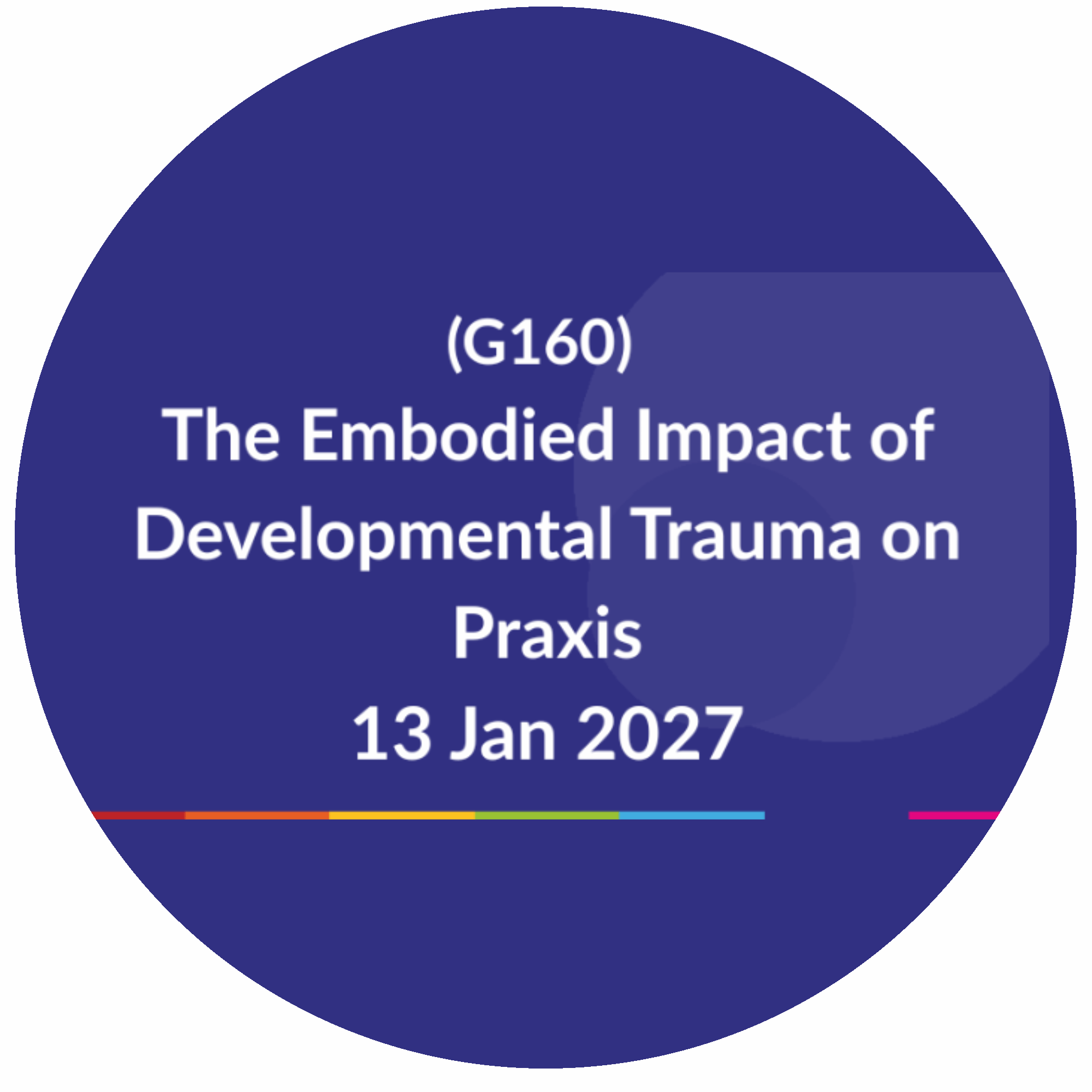
4 pm - 6 pm, 13 January 2027 (UK Time)
Course Description
Developmental trauma shapes far more than emotions and relationships; it fundamentally influences how the brain and body come together to plan, organise, and execute purposeful action. Over two engaging hours, Kim Barthel, OTR, explores how early adversity alters autonomic regulation, sensorimotor integration, and the development of praxis through the lens of contemporary neuroscience and sensory integration.
When the nervous system becomes organised around survival rather than exploration, movement may become rigid, inefficient, or poorly coordinated. This dynamic can limit flexibility, problem-solving, learning and participation in everyday life. Understanding the relationship between movement, cognition, emotional regulation and lived experience offers clinicians a powerful framework for recognising why praxis challenges are so common in individuals with developmental trauma.
Participants will gain a deeper understanding of how developmental trauma is embodied through sensorimotor development and praxis, enhancing their clinical reasoning and expanding their ability to provide more holistic, trauma-informed interventions that support functional participation and meaningful engagement.
What We'll Cover:
How developmental trauma affects brain development, sensory integration, and praxis (motor planning).
The impact of early adversity on autonomic regulation and the nervous system.
Why survival-based nervous system responses can limit movement, learning, problem-solving, and participation.
The links between movement, cognition, emotional regulation, and lived experience.
Applying contemporary neuroscience and sensory integration theory to understand praxis challenges in individuals with developmental trauma.
What You'll Gain:
By the end of this course, you will be able to:
Describe how developmental trauma influences the neurobiology of praxis, motor planning, and motor execution.
Explain the relationship between autonomic regulation, sensorimotor integration, and the development of purposeful movement.
Recognise clinical signs that praxis challenges may reflect adaptations to developmental trauma rather than isolated motor deficits.
Appreciate the reciprocal relationship between movement, cognition, emotional regulation, and participation into intervention planning.
Who This Course is For
Open to all.
A basic knowledge of sensory integration is recommended. If you're new to SI, check out our FREE Discover Sensory Processing and Integration course→.
Ideal for clinicians and professionals who work with individuals whose movement, learning, behaviour and participation have been influenced by early adversity.
Clinical population: Relevant to children, adolescents and adults with developmental trauma, adverse childhood experiences (ACEs), attachment challenges, sensory integration differences, neurodevelopmental conditions, mental health concerns, and complex developmental presentations that affect participation and motor functioning.
Hosted by